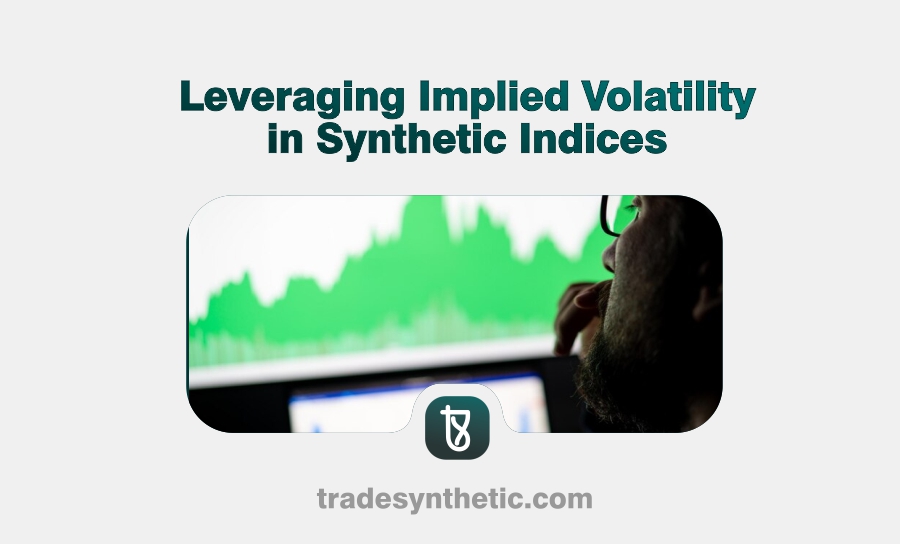
In trading synthetic indices, one of the most powerful tools available to traders is implied volatility. Implied volatility (IV) reflects the market’s expectation of future price movements, and understanding how to leverage implied volatility in synthetic indices can significantly enhance your trading strategy.
This guide will take you through the concept of implied volatility, explain how it affects synthetic indices, and offer practical tips on using it to your advantage.
What is Implied Volatility?
Implied volatility is the market’s expectation of an asset’s future volatility. Unlike historical volatility, which looks at past price movements, implied volatility estimates how much an asset’s price is likely to fluctuate in the future. It’s calculated using options prices and can help traders gauge market sentiment and make informed decisions.
When applied to synthetic indices, implied volatility is particularly important because these indices often exhibit sharp price movements. Understanding IV can help traders predict these moves and structure their trades accordingly, thus optimising their trading strategies.
How Implied Volatility Impacts Synthetic Indices
Synthetic indices are designed to mimic real-world financial markets but are not directly influenced by economic events. Instead, they are driven by price fluctuations based on a variety of factors, including volatility. Implied volatility in synthetic indices reflects the market’s expectations about how much the price of the index will move over a specific time frame.
When implied volatility increases, option prices tend to rise, making option strategies more expensive. On the other hand, if implied volatility decreases, options prices generally fall. In both cases, implied volatility directly affects the pricing and profitability of options trades, making it an essential tool for traders in synthetic indices.
Why Leveraging Implied Volatility is Crucial for Synthetic Indices Traders
Understanding and leveraging implied volatility can provide traders with several advantages when trading synthetic indices:
Market Sentiment Analysis
Implied volatility helps traders gauge the level of market fear or uncertainty. A high IV indicates that the market expects significant price movements, while a low IV suggests price stability.
Optimised Trading Strategies
By analysing implied volatility, traders can choose the best time to enter or exit trades. For example, if the IV is high, options strategies like straddles or strangles could be effective, as they profit from significant price movement. If IV is low, strategies like iron condors or butterflies may be more suitable, as they profit from stable prices.
Risk Management
High IV often signals that the market is expecting large price swings, which can increase the risk of significant losses. By understanding IV, traders can structure their trades to mitigate this risk. Conversely, low IV might present opportunities for lower-risk trades, as price movements are expected to be smaller.
Profiting from Volatility
For traders looking to profit from price swings, high IV can be a goldmine. By correctly predicting the direction of these movements, traders can make substantial profits.
How to Use Implied Volatility in Synthetic Indices Trading
Traders can leverage implied volatility in synthetic indices trading by using a variety of methods. Below are some of the most effective approaches:
1. Volatility Skew Analysis
Volatility skew is the difference in implied volatility between options with different strike prices but the same expiration date. Typically, out-of-the-money options will have higher implied volatility than in-the-money options, which can provide valuable insights into market sentiment.
By analysing the volatility skew, traders can determine which strike prices are expected to experience higher volatility. This allows traders to focus on the most potentially profitable options, especially when trading synthetic indices that are more prone to large price fluctuations.
2. Implied Volatility Rank (IV Rank)
The implied volatility rank indicates where the current IV lies relative to its historical range. A high IV rank means that implied volatility is higher than usual, while a low IV rank means it is relatively low. This information can help traders decide whether to buy or sell options. When IV is high, options tend to be more expensive, making selling options more profitable. When IV is low, options are cheaper, making it an ideal time to buy options.
Traders can use IV rank to identify favourable market conditions for specific strategies. For example, when IV is high, strategies like short straddles or short strangles may work well, as you can collect premiums from options that are overpriced. When IV is low, buying options can be more attractive, as they are cheaper.
3. Implied Volatility Surface
The implied volatility surface is a three-dimensional chart that represents the implied volatility of options across different strike prices and expiration dates. By analysing the surface, traders can identify trends in IV and gain insights into how volatility is expected to behave in the future.
Traders can use the implied volatility surface to spot opportunities for trades with favourable IV levels. For example, if the IV is unusually high for short-term options but low for long-term options, traders may take advantage of the discrepancy by implementing a calendar spread or similar strategy.
4. Monitor News and Events
Implied volatility is highly sensitive to market-moving events, such as economic reports, earnings announcements, or geopolitical developments. These events can lead to sharp price movements, thereby spiking implied volatility. Traders can monitor news events and adjust their strategies accordingly. For example, if you anticipate a market-moving event, you may want to buy options to profit from the potential volatility.
Volatility Trading Strategies
Several option strategies can help you profit from changes in volatility, particularly when trading synthetic indices. Some of these include:
- Straddles and Strangles: Both strategies involve buying a put and a call with the same or different strike prices. These strategies are best used when you expect high volatility and significant price movement in either direction.
- Iron Condor: A neutral strategy that profits when the market remains stable. It involves selling an out-of-the-money call and put option while simultaneously buying further out-of-the-money options to limit risk. This strategy works well when implied volatility is high, as it allows you to profit from the decay of overpriced options.
- Butterfly Spreads: Butterfly spreads are another neutral strategy that profits from low volatility. This strategy involves buying and selling call or put options at different strike prices to create a range of potential outcomes. Butterfly spreads are particularly effective when implied volatility is low.
How to Adjust Your Synthetic Indices Trading Based on Implied Volatility
Adapting your trading strategy based on implied volatility is essential for maximising profitability. Here are some practical tips for adjusting your synthetic indices trading:
- High Implied Volatility (IV)
- Consider strategies that profit from high volatility, such as straddles, strangles, or options selling (iron condors).
- Be cautious with buying options, as they will be more expensive in high IV conditions.
- Low Implied Volatility (IV)
- Look for opportunities to buy options when IVs are low.
- Use strategies like butterfly spreads or calendar spreads to take advantage of low volatility and time decay.
- Stay Informed
- Keep an eye on economic reports, earnings announcements, and news events that could impact implied volatility.
- Adjust your positions as needed to capitalise on changes in volatility.
Conclusion
In conclusion, leveraging implied volatility in synthetic indices trading can provide you with a powerful edge in the markets. You can improve your trading performance and manage risk effectively by understanding how implied volatility works, recognising its impact on options prices, and using volatility-based strategies.
Synthetic indices are a unique and exciting market to trade, and incorporating implied volatility into your strategy can enhance your ability to predict market movements and identify profitable opportunities. Don’t forget, Consistency and Patience are key to sustainable, consistent profits, and with that, you can take your trading to the next level.
Frequently Asked Questions About Implied Volatility in Synthetic Indices
What is implied volatility?
Implied volatility is a measure of how much the market expects an asset’s price to fluctuate in the future. It is derived from options prices and reflects market sentiment.
Why is implied volatility important for synthetic indices traders?
Implied volatility is crucial because it helps traders assess market conditions, select suitable trading strategies, and manage risk. It also provides insights into price movements, which is key to successful trading.
How can I use implied volatility in my synthetic indices trading strategy?
You can use implied volatility to choose the best time to enter or exit trades, select suitable options strategies, and gauge market sentiment. For instance, a high IV may suggest a straddle or strangle strategy, while a low IV may make butterfly or calendar spreads more attractive.
How does implied volatility affect options prices in synthetic indices?
Implied volatility directly impacts options prices. Higher IV increases options premiums, making them more expensive, while lower IV reduces premiums, making options cheaper.
Can I profit from changes in volatility in synthetic indices?
Yes, traders can profit from both rising and falling implied volatility by using strategies that benefit from price movements, such as straddles, strangles, and iron condors.